
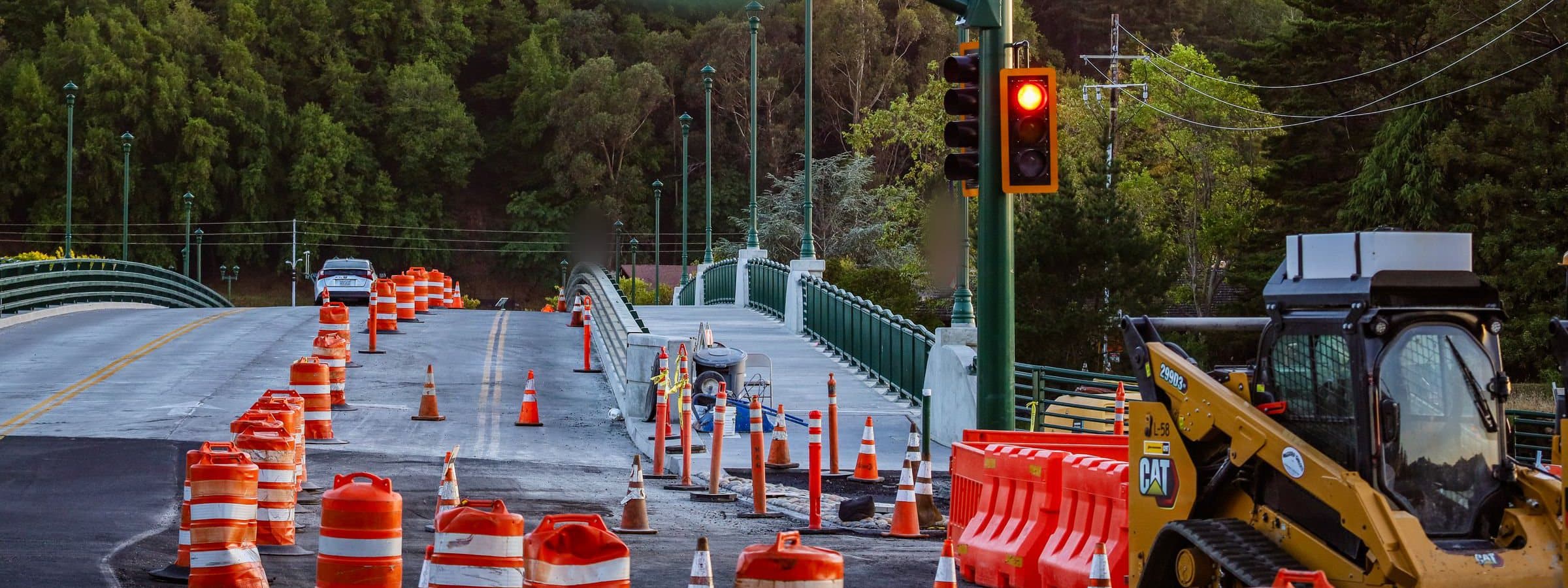
Vancouver has its own Charter
Every other municipality in British Columbia takes its road authority from the Community Charter. Vancouver takes its from the Vancouver Charter — a separate provincial statute that applies to Vancouver alone, and gives the City its own powers over street use.
In practice that means a Vancouver street occupancy is its own process with its own conditions, not the same application you would file in Burnaby or Surrey with the letterhead changed. Assuming otherwise is how a closure gets refused the week it was meant to start.
Highway 1 and Highway 99 still belong to the province where they run through the city, so a job on the Cassiar Connector or the Oak Street Bridge approaches is a MoTI application even though it is inside Vancouver.
Frequently asked
The City of Vancouver for city streets, under the Vancouver Charter rather than the Community Charter that covers the rest of BC. The Ministry of Transportation and Infrastructure for Highway 1 and Highway 99 where they pass through the city.
Full closures on arterials are rarely approved during peak hours, which pushes much of this work to nights and weekends. What is achievable depends on the road and the conditions the City attaches, and that is settled at the plan stage rather than on site.
Yes. Detour routing and the signage that goes with it are part of the closure, not a separate job — a closure without a signed detour just moves the problem to the next intersection.
Who issues the permit
City of Vancouver
Municipal streets in Vancouver.
vancouver.caBC Ministry of Transportation and Infrastructure (MoTI)
Provincial highways and their rights-of-way, anywhere in BC — including where a highway runs through a municipality.
Provincial corridors through Vancouver
- Highway 1 — Trans-Canada, through the Cassiar Connector
- Highway 99 — Oak Street Bridge, Oak and Granville
- Highway 99 north — Lions Gate Bridge